
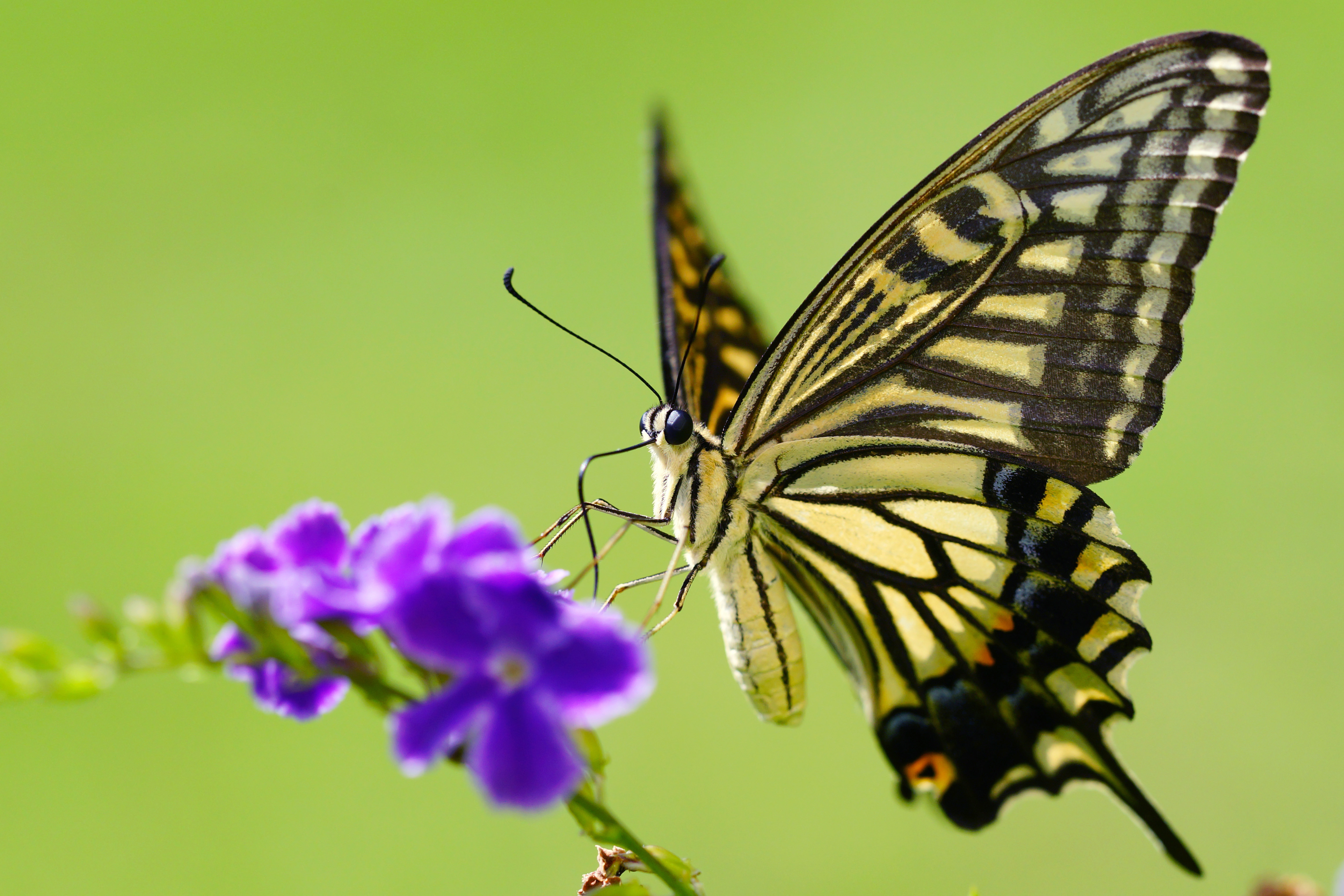

From spring to summer, a large butterfly glides gracefully through forests and gardens.
The tiger swallowtail is instantly recognizable by its bright yellow wings marked with bold black stripes. It is one of Korea’s most iconic large butterflies, admired not only for its beauty but also for its clear role in the ecosystem.
🧬 What Is the Tiger Swallowtail?
The name “tiger swallowtail” comes from the tiger-like stripes on its wings. It is among the most commonly observed large butterflies in Korea and a classic symbol of springtime butterfly watching.
- Class / Order / Family: Insecta / Lepidoptera / Papilionidae
- Key traits
- Yellow wings with black vertical stripes
- Large wingspan and elegant flight
- Often seen near human settlements
👉 With relatively little variation between individuals, it is easy to identify.
🌍 Distribution & Habitat
The tiger swallowtail is widely distributed across East Asia and can be found throughout Korea.
- Distribution
- Korean Peninsula
- China, Japan, and neighboring regions
- Typical habitats
- Forest edges
- Riverbanks
- Gardens and parks
- Rural villages
🌿 Wherever its larval host plants grow, the butterfly may appear—even in urban areas.
👀 Appearance & Physical Characteristics
- Wingspan: About 7–10 cm (2.8–4 in)
- Wing color
- Bright yellow background
- Bold black stripes
- Tail
- Short tail-like extensions on the hindwings
- Sexual dimorphism
- Females are slightly larger than males
✨ The delicate patterns along the wing edges give it a strong presence even in flight.
🌿 Feeding & Lifestyle
Adult butterflies
- Diet
- Flower nectar
- Behavior
- Active during the day
- Frequently seen basking and feeding in sunlight
Caterpillars
- Host plants
- Prickly ash (Zanthoxylum)
- Trifoliate orange
- Citrus trees
- Defense
- Young larvae resemble bird droppings
- Older larvae turn green and develop eye-like markings
👉 These camouflage strategies are excellent adaptations for avoiding predators.
🐣 Life Cycle (Complete Metamorphosis)
The tiger swallowtail undergoes complete metamorphosis.
1️⃣ Egg
2️⃣ Caterpillar
3️⃣ Chrysalis
4️⃣ Adult
- Chrysalis
- Attached to twigs or stems
- Generations
- 2–3 per year
- Overwintering
- As a chrysalis
🦋 The butterflies seen in spring are those that survived winter in the pupal stage.
🧠 Behavior & Defense
- Flight
- Calm yet powerful wingbeats
- Defense
- Camouflage during larval stages
- Quick directional changes during flight as adults
⚠️ While non-toxic, their bold appearance can still function as a visual warning.
🌱 Ecological Role
The tiger swallowtail plays an important role in nature.
- Assists with pollination
- Helps maintain balance between plants and insects
- Acts as an indicator species of healthy ecosystems
🦋 Areas where butterflies are common are often relatively well-preserved environments.
🧡 Why the Tiger Swallowtail Is Loved
✔️ One of Korea’s most familiar large butterflies
✔️ Bright, beautiful wing patterns
✔️ A favorite subject for children’s nature observation
✔️ A clear sign of seasonal change
The tiger swallowtail represents:
🦋 A messenger of spring and summer,
🦋 A small traveler linking forests and villages, and
🦋 A living expression of natural order.
If a yellow-winged butterfly drifts slowly past you on a garden path or forest trail, pause for a moment and watch.
Within that gentle flutter lies the story of the seasons and an ecosystem breathing together 🦋🌿
댓글 남기기