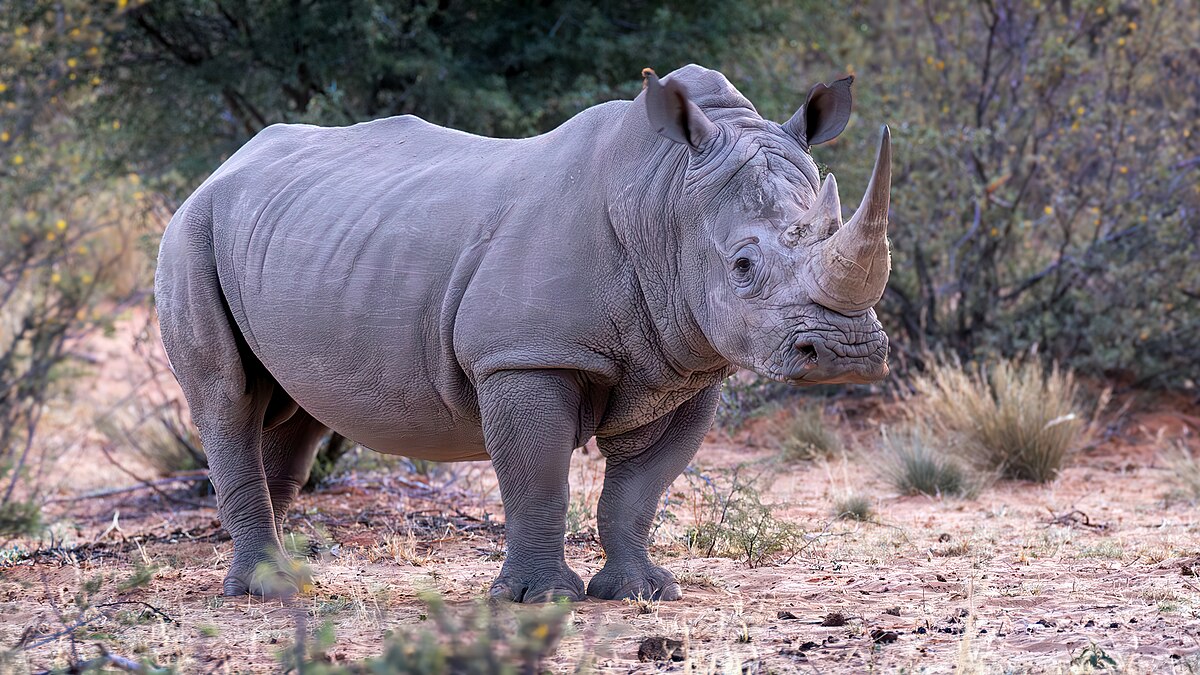


Across the vast African savanna, a massive figure moves slowly as it grazes on grass.
The white rhinoceros is the largest living species of rhinoceros and, despite its intimidating size, is known for a relatively calm and peaceful temperament. It stands as one of the most iconic herbivores of the African grasslands.
🧬 What Is the White Rhinoceros?
The white rhinoceros is one of the two rhinoceros species native to Africa and is clearly distinguished from the black rhinoceros by the shape of its mouth and feeding style.
- Order / Family: Perissodactyla / Rhinocerotidae
- Key traits
- Largest of all living rhinos
- Wide, flat mouth adapted for grazing
- Herbivorous and generally placid in nature
👉 The name “white” does not refer to color; it is believed to come from the Afrikaans word “wijd”, meaning wide, describing its broad mouth.
🌍 Habitat & Distribution
White rhinoceroses inhabit the grasslands of eastern and southern Africa.
- Main range
- South Africa
- Namibia
- Kenya
- Zimbabwe
- Preferred habitats
- Savannas
- Open grasslands
- Flat areas near water sources
🌿 Wide open spaces and abundant grass are essential to their survival.
👀 Physical Characteristics
- Body length: ~3.5–4.2 m (11.5–13.8 ft)
- Shoulder height: ~1.8–2.0 m (6–6.6 ft)
- Weight: 1.8–2.5 tons
- Horns
- Two horns made of keratin
- The front horn is larger and longer
- Mouth
- Broad, flat lips for grazing
✨ Their massive size serves as a powerful deterrent to predators.
🌱 Diet & Daily Life
The white rhinoceros is a strict herbivore.
Main foods
- Short grasses
- Savanna vegetation
Daily habits
- Spends much of the day grazing
- Most active at dawn and dusk
- Rests in shade or mud wallows during the hottest hours
👉 Mud wallowing helps regulate body temperature and remove parasites.
🧠 Temperament & Social Behavior
- Personality
- Generally calm and non-aggressive
- Poor eyesight but excellent hearing and smell
- Social structure
- Females and calves form small groups
- Adult males are territorial
🦏 When threatened, white rhinos can charge at speeds of over 50 km/h (30 mph), making close encounters extremely dangerous.
🐣 Reproduction & Growth
- Gestation period: ~15–16 months
- Births
- One calf at a time
- Parental care
- Calves stay with their mother for 2–3 years
- Maturity
- Females: ~6–7 years
- Males: ~10 years
✨ Their slow reproductive rate means population recovery takes many years.
⚠️ Threats & Conservation Status
White rhinoceroses continue to face serious threats.
Major threats
- Illegal poaching for horns
- Habitat loss
- Human–wildlife conflict
📉 The northern white rhinoceros is now functionally extinct, with only two females remaining.
🌱 Ecological Role
- Maintains grass height in savannas
- Creates grazing opportunities for other herbivores
- Helps sustain ecological balance
👉 White rhinoceroses are often called “landscape architects” of the grasslands.
🧡 Why the White Rhinoceros Is Special
✔️ The largest living rhinoceros
✔️ A gentle giant among herbivores
✔️ A keystone species of the savanna
✔️ Dependent on human protection for survival
The white rhinoceros represents:
🦏 A peaceful giant of the plains,
🦏 A living legacy of ancient life, and
🦏 A species whose future depends on our choices today.
As long as white rhinoceroses continue to roam the savanna,
the grasslands themselves remain alive.
Protecting the white rhinoceros is not just about saving one species—
it is about safeguarding the future of Africa’s savannas 🌍🦏
댓글 남기기