
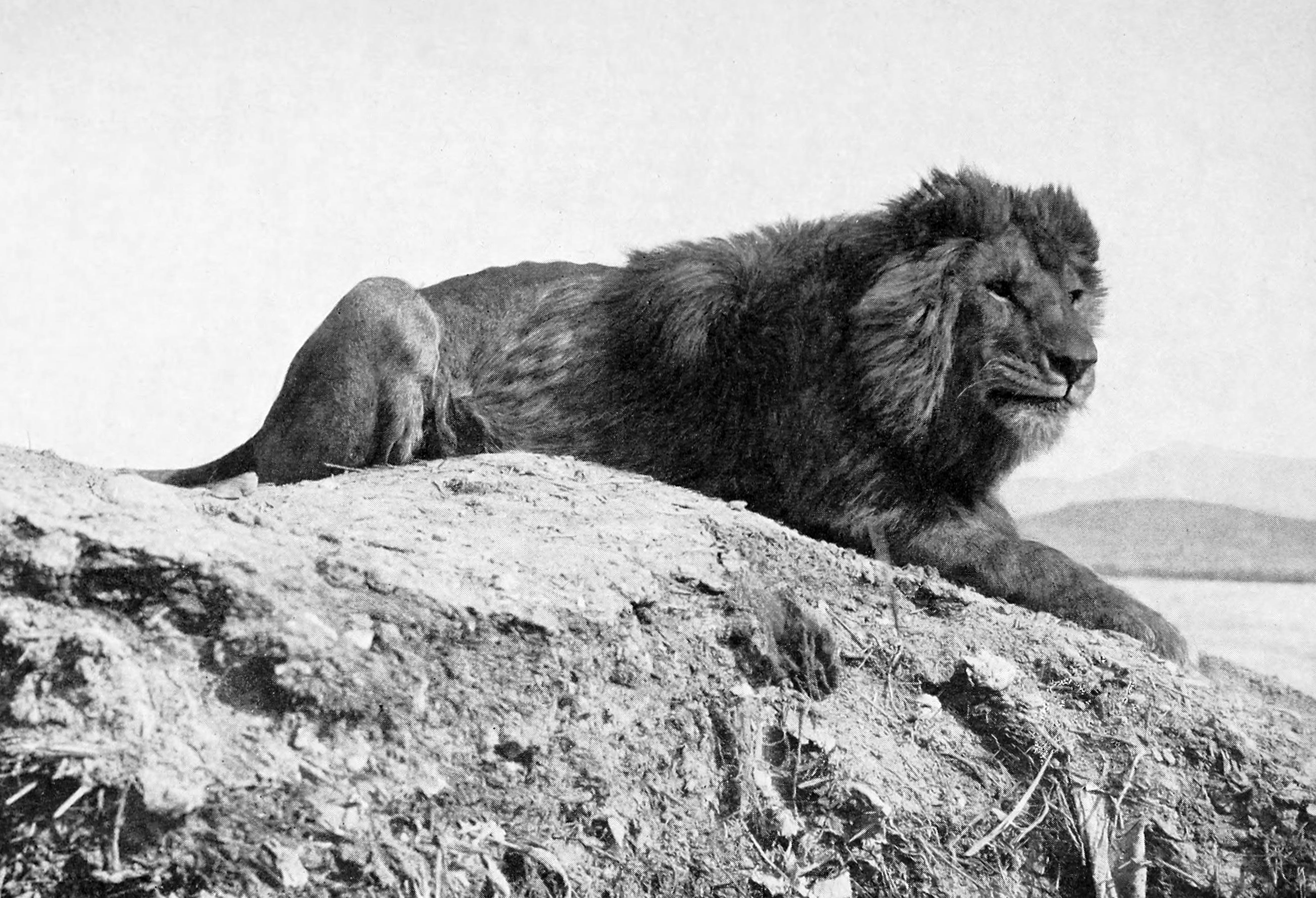
Once roaming the forests and mountains of North Africa, a magnificent lion ruled as a symbol of power and kingship.
The Barbary lion is now extinct in the wild, yet it remains one of the most legendary lions in human history—remembered for its imposing size, dark mane, and deep connection to culture, art, and empire.
🧬 What Was the Barbary Lion?
The Barbary lion was a population of lions native to North Africa (the Maghreb region).
Historical records describe it as one of the largest and most majestic lions, especially noted for the impressive mane of adult males.
- Order / Family: Carnivora / Felidae
- Common name: Barbary Lion
- Also known as: Atlas Lion
- Current status
- Extinct in the wild (early 20th century)
👉 It is often described as “the most regal of all lions.”
🌍 Historical Range & Habitat
The Barbary lion once occupied vast areas of North Africa.
- Main regions
- Morocco
- Algeria
- Tunisia
- Habitats
- Atlas Mountains
- Forests (both coniferous and deciduous)
- Grasslands and rugged highlands
🌲 Unlike most modern lions, the Barbary lion was adapted to cooler, mountainous, and forested environments.
👀 Physical Characteristics
- Size
- Believed to be larger and heavier than many modern African lions
- Mane
- Exceptionally long and thick
- Often extended over the shoulders and belly
- Coloration
- Dark brown to nearly black mane in males
✨ The mane became a lasting symbol of royalty, authority, and strength.
🦌 Lifestyle & Diet
As an apex predator, the Barbary lion hunted a wide range of prey.
Likely prey
- Deer
- Wild cattle
- Wild boar
- Livestock (near human settlements)
Behavioral traits
- Strong endurance suited to mountainous terrain
- Large territories
👉 Increased contact with humans led to frequent conflict.
🏛️ The Barbary Lion in Human History
Few animals have been as closely tied to human civilization as the Barbary lion.
- Ancient Rome
- Captured and transported for gladiatorial games and public executions
- Symbol of power
- Featured in royal crests, statues, and heraldry across Europe
- Medieval era
- Hunted by kings and nobility as a demonstration of dominance
🦁 The belief that “to conquer the lion is to claim power” contributed heavily to its decline.
⚠️ Causes of Extinction
The Barbary lion is a classic example of human-driven extinction.
Main causes
- Uncontrolled hunting
- Habitat destruction
- Retaliatory killings to protect livestock
- Slow population recovery
📉 The last confirmed wild Barbary lions are believed to have disappeared in Morocco during the 1920s.
🔬 Is the Barbary Lion Truly Gone?
Some lions once kept by royal families and zoos may carry genetic traces of Barbary lions.
- Current understanding
- No confirmed pure Barbary lions remain
- Some mixed ancestry may exist
- Scientific value
- Important for genetic and historical research rather than true restoration
👉 Most scientists agree that full restoration is extremely unlikely.
🌱 Ecological & Conservation Significance
- A symbol of the loss of large apex predators
- A warning about unchecked human exploitation
- A cornerstone story in modern wildlife conservation ethics
🦁 The Barbary lion reminds us that even the strongest species can fall to human pressure.
🧡 Why the Barbary Lion Still Matters
✔️ One of the most legendary lions in history
✔️ A rare mountain- and forest-adapted lion
✔️ Deeply embedded in human culture and symbolism
✔️ A powerful lesson in extinction and responsibility
The Barbary lion is:
🦁 A king lost to nature,
🦁 A ruler preserved in memory, and
🦁 A mirror reflecting humanity’s past choices.
Its roar no longer echoes through the Atlas Mountains,
but its story continues to shape how we think about conservation today.
Remembering the Barbary lion is not only an act of mourning—
it is a promise to protect the wildlife that still remains 🦁🌍
댓글 남기기