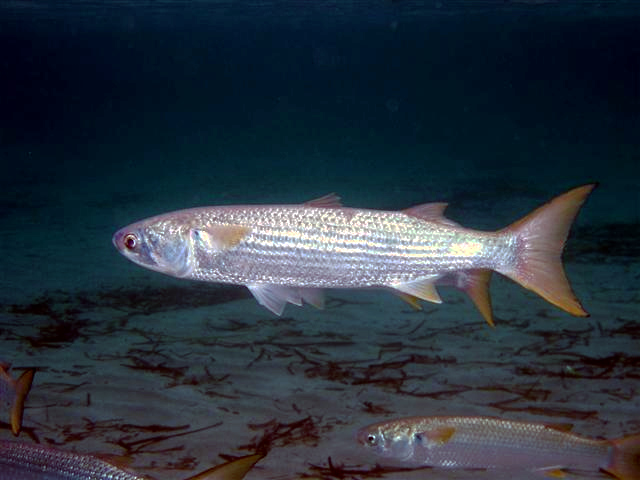
Powerfully leaping above the water’s surface,
traveling in tight schools,
and long cherished as a familiar food fish along the coast.
The mullet is a representative migratory fish that moves freely between the sea, estuaries, and even rivers.
🧬 What Is a Mullet?
Mullets belong to the family Mugilidae, a group of coastal fishes widely distributed in temperate and subtropical waters around the world. They are common in East Asia and have long played an important role in fisheries and food culture.
- Class / Order / Family: Actinopterygii / Mugiliformes / Mugilidae
- Key traits
- Migratory, moving between marine, brackish, and freshwater
- Strong schooling behavior
- Unusual feeding strategy focused on organic matter
- Exceptional adaptability to changing environments
👉 Often described as “a fish that survives almost anywhere.”
🌍 Distribution & Habitat
Mullets are widely found along coastlines and estuaries.
- Main regions
- Korean coastal waters
- Japan
- China
- Southeast Asia
- Temperate and subtropical seas worldwide
- Habitats
- Coastal waters
- Estuaries (where rivers meet the sea)
- Lower reaches of rivers
- Harbors and breakwaters
🌊 Their strong tolerance to changes in salinity allows them to thrive in diverse habitats.
👀 Appearance & Physical Characteristics
- Body length: Typically 30–60 cm (12–24 in); large individuals may exceed 80 cm (31 in)
- Body shape
- Elongated and muscular
- Coloration
- Grayish-blue back
- Silvery-white belly
- Fins
- Powerful tail fin
- Mouth
- Small, positioned on the underside of the head
✨ Simple in appearance, yet highly efficient at cutting through strong currents.
🍽️ Diet & Feeding Habits
Mullets are omnivorous with strong herbivorous tendencies.
Main foods
- Organic detritus on the seabed
- Microalgae
- Plankton
- Microorganisms in sediment
👉 They ingest sediment and filter out nutrients, leaving behind sand and mud.
🐟 Behavior & Habits
- Travel in large schools
- Leap above the water when startled
- Seasonal movement patterns
- Mostly active during daylight hours
🐟 Jumping behavior is thought to help avoid predators and rapidly change direction.
🐣 Reproduction & Life Cycle
- Spawning season: Late autumn to winter (varies by species and region)
- Spawning grounds
- Primarily offshore marine waters
- Eggs
- Pelagic (floating) eggs
- Lifespan
- About 5–10 years
👉 Juveniles typically grow in estuaries and lower river sections.
🌱 Ecological Role
- Remove organic debris from the seabed, contributing to water quality
- Serve as an important link in the food chain
- Provide prey for larger fish and birds
🌍 Waters rich in mullets are often relatively stable and productive ecosystems.
🍴 Mullets in Food Culture
- Raw mullet (sashimi-style)
- Mullet soup
- Fermented mullet roe
- Dried mullet
👉 In some regions, people say “winter mullet is like medicine,” highlighting its seasonal value.
⚠️ Relationship with Humans
- An important target of coastal fisheries
- Sensitive to pollution in harbors and estuaries
- Flavor and quality vary with environmental conditions
👉 Clean coastal waters are essential for high-quality mullet.
🧡 Why Mullets Are Special
✔️ Adaptable across sea and river environments
✔️ Strong schooling migratory fish
✔️ Contribute to natural water purification
✔️ Deeply connected to long-standing food traditions
The mullet is:
🐟 A tough survivor that looks ordinary but endures,
🐟 A fish that freely crosses environmental boundaries, and
🐟 A long-standing link between the sea and human life.
Each leap above the water reflects generations of resilience—
a quiet reminder of how life adapts, moves, and persists along the shifting edge between land and sea 🌊🐟
댓글 남기기