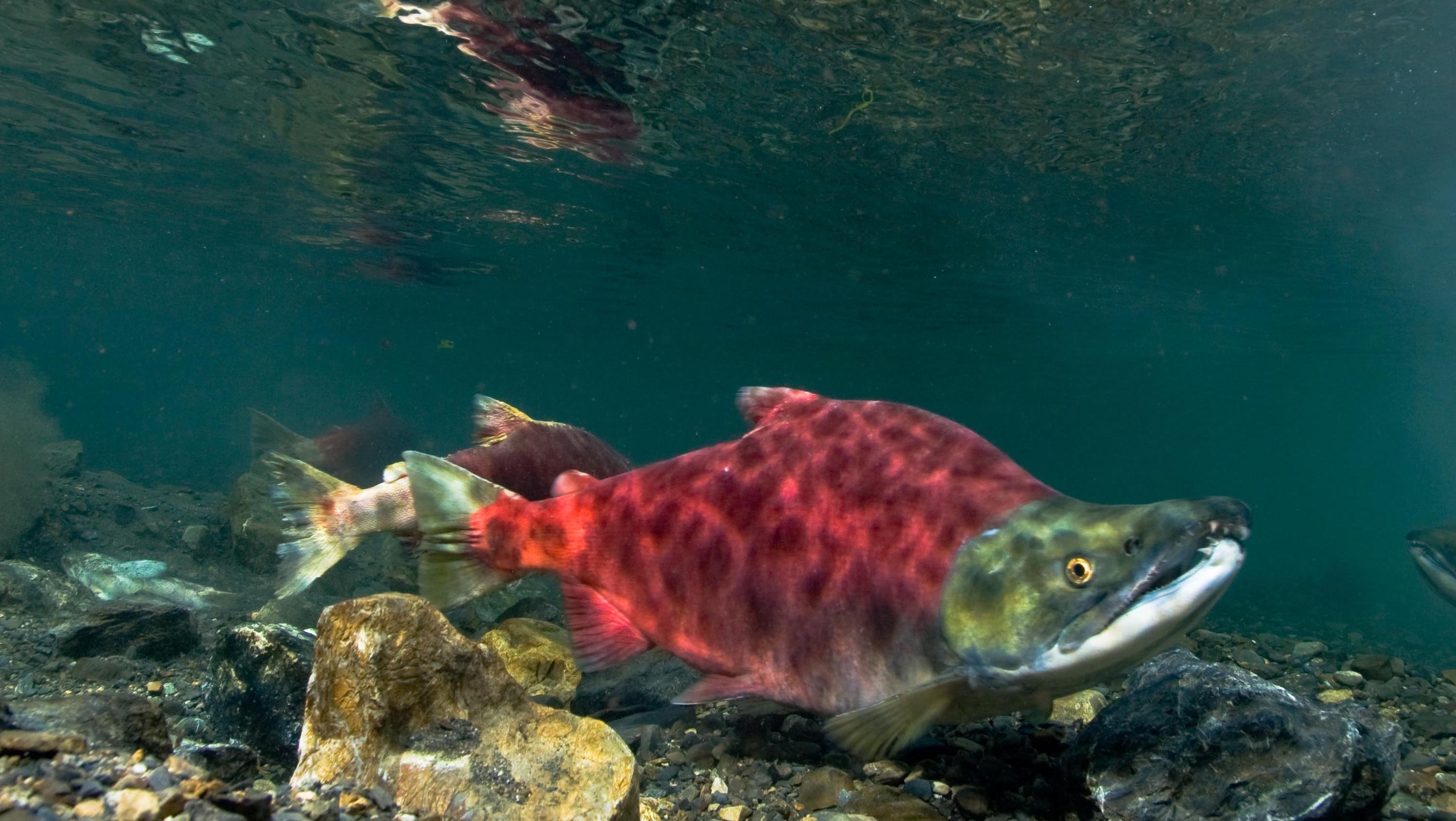

Living in the silver-blue ocean,
then turning a vivid red as spawning season arrives.
The red salmon, commonly known as the sockeye salmon, is famous for its dramatic color transformation and powerful homing instinct. It is one of the most visually striking salmon species and a vivid symbol of nature’s life cycle.
🧬 What Is Red Salmon?
Red salmon refers to the sockeye salmon, a Pacific salmon species known for showing the most intense color change during spawning. True to its name, its body turns bright red as it returns to freshwater.
- Class / Order / Family: Actinopterygii / Salmoniformes / Salmonidae
- Also known as
- Red salmon
- Sockeye salmon
- Key traits
- Brilliant red body during spawning
- Strong homing instinct
- Firm flesh and rich flavor
- Life cycle that includes lakes and rivers
👉 It is the salmon most remembered for its color.
🌍 Distribution & Habitat
Red salmon are found throughout the North Pacific region.
- Main regions
- Alaska
- Canada
- Northwestern United States
- Russian Far East
- Habitat pattern
- Juveniles: rivers and lakes
- Adults: ocean
- Spawning: upstream natal rivers
🌊 They are especially known as lake-associated salmon.
👀 Appearance & Physical Characteristics
- Length: About 60–80 cm (24–31 in)
- Weight: About 2–4 kg (4.5–9 lb)
- Ocean phase
- Silver-colored body
- Spawning phase
- Bright red body
- Greenish head
- Body shape
- Slim, muscular, and firm
✨ The contrast between the red body and green head is iconic.
🍽️ Diet & Feeding Habits
Red salmon feed mainly on plankton-based prey.
Main foods
- Zooplankton
- Small crustaceans
- Aquatic insect larvae
👉 This diet influences both the color and flavor of their flesh.
🔄 Homing Instinct & Life Cycle
The life of a red salmon is a journey of return.
- Hatch in freshwater
- Grow in lakes and rivers
- Migrate to the ocean
- Return to their natal river to spawn
- Die after spawning
🐟 Swimming upstream for hundreds of kilometers,
they demonstrate extraordinary endurance and instinct.
🧠 Behavior & Ecological Traits
- Exceptional navigation ability
- Strong muscular endurance
- Mass spawning migrations
- Post-spawning nutrient contribution
🌱 Their bodies enrich rivers and surrounding forests.
🌱 Ecological Importance
Red salmon are a key link between marine and freshwater ecosystems.
- Major food source for bears, birds, and mammals
- Revitalize river ecosystems
- Support forest growth through nutrient transfer
🌍 Each salmon run represents a renewal of the ecosystem.
🍣 Culinary Value
Red salmon are prized for their color and taste.
- Deep red flesh
- Firm texture
- Ideal for grilling, smoking, and canning
👉 They are especially famous worldwide as canned salmon.
⚠️ Threats & Conservation Issues
- Dams blocking migration routes
- Water pollution
- Overfishing
- Rising water temperatures due to climate change
👉 Sustainable fisheries and habitat protection are essential.
🧡 Why Red Salmon Is Special
✔️ Vivid red coloration during spawning
✔️ Unique life cycle involving lakes
✔️ A cornerstone of nutrient cycling
✔️ Excellent flavor and firm texture
Red salmon are:
🐟 Salmon that prove life through color,
🐟 A symbol of the instinct to return home, and
🐟 A central force in nature’s cycle.
When rivers turn red with returning salmon,
the sight reminds us that nature’s rhythms
are still alive, powerful, and deeply connected 🌊🐟
댓글 남기기