

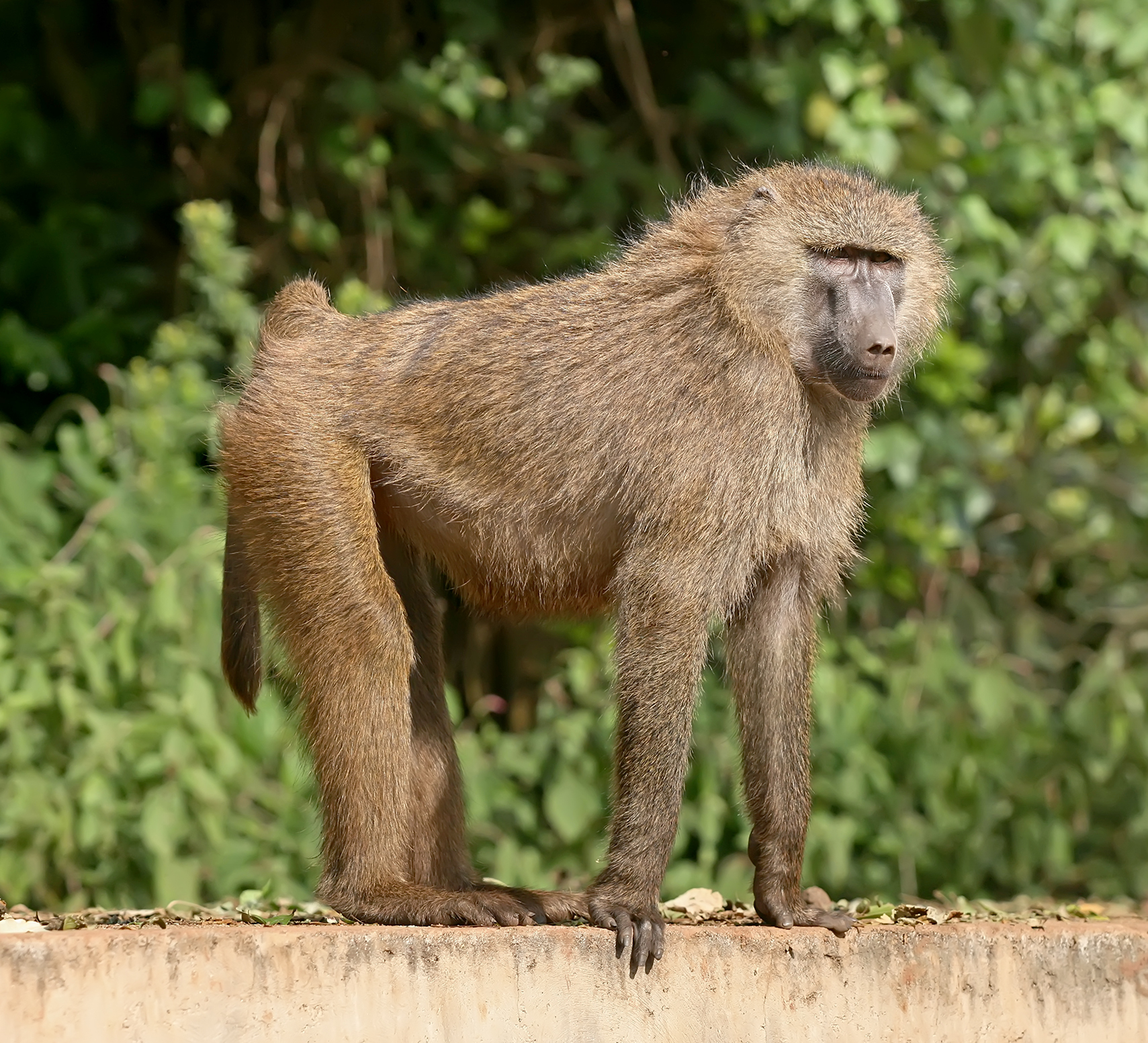
With a powerful jaw, sharp eyes,
and an imposing presence as they move across open plains in large groups,
the baboon is one of Africa’s most recognizable primates. Known for its complex social structure and remarkable adaptability, the baboon thrives in a wide range of environments.
🧬 What Is a Baboon?
Baboons belong to the Old World monkey group and include several species. They are characterized by large body size, strong social bonds, and high intelligence, allowing them to adapt successfully to changing environments.
- Class / Order / Family: Mammalia / Primates / Cercopithecidae
- Key traits
- Powerful jaws and large canine teeth
- Long, dog-like muzzle with expressive faces
- Group-centered lifestyle
- Strong learning and problem-solving abilities
👉 A primate that embodies both strength and social order.
🌍 Distribution & Habitat
Baboons are widely distributed across Africa.
- Main range
- East Africa
- Southern Africa
- Parts of West Africa
- Habitats
- Savannas
- Shrublands
- Forest edges
- Rocky and mountainous areas
🌿 They live a semi-terrestrial lifestyle, using both the ground and trees.
👀 Appearance & Physical Characteristics
- Body length: About 50–100 cm (20–39 in)
- Weight
- Males: ~20–40 kg (44–88 lb)
- Females: ~10–25 kg (22–55 lb)
- Face
- Long, protruding muzzle
- Tail
- Medium length, often curved at the tip
- Fur color
- Grayish-brown to yellowish-brown
✨ The males’ large canine teeth serve as symbols of dominance and defense.
🍎 Diet & Feeding Habits
Baboons are omnivorous and highly opportunistic feeders.
Main foods
- Fruits
- Seeds and roots
- Grass and leaves
- Insects
- Small mammals and birds
- Human food near settlements (opportunistic)
👉 This flexible diet supports their survival in diverse environments.
🧠 Social Structure & Behavior
Baboons have one of the most complex social systems among primates.
- Troop size: dozens to over 100 individuals
- Clear dominance hierarchies
- Female-centered family lines
- Males often migrate to new groups upon maturity
🐒 Cooperation, competition, and alliances coexist in a highly “political” society.
🐣 Reproduction & Infant Care
- Gestation period: About 6 months
- Birth
- Usually a single infant
- Care
- Primarily provided by the mother
- Supported by group protection
👉 Infants grow up under the watchful eyes of the entire troop.
🌱 Ecological Role
Baboons play an important ecological role.
- Disperse seeds
- Control insect and small-animal populations
- Serve as prey for large predators
🌍 Their movements help shape the ecological dynamics of the savanna.
⚠️ Conflict with Humans
Their adaptability sometimes leads to conflict with people.
Common issues
- Crop raiding
- Entering urban areas
- Risk of capture or retaliation
👉 Long-term coexistence requires sustainable management and education.
🧡 Why Baboons Matter
✔️ One of Africa’s most widespread primates
✔️ Highly developed social organization
✔️ Exceptional adaptability
✔️ A key component of savanna ecosystems
Baboons are:
🐒 Architects of social order on the savanna,
🐒 Primates combining strength and intelligence, and
🐒 Lives that stand at the boundary between nature and humanity.
As they move together across the plains,
their coordinated behavior quietly reveals
how society, survival, and the natural world
are intricately connected 🌍🐒
댓글 남기기