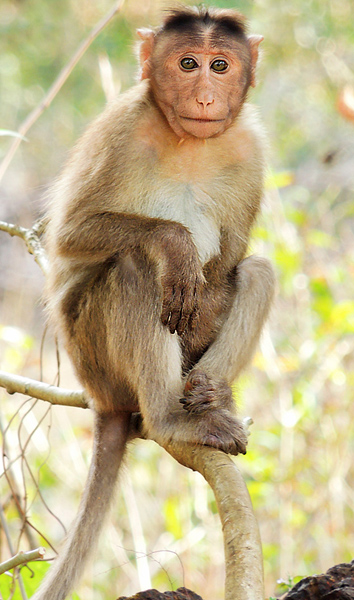

Monkeys soaking in hot springs amid falling snow,
others living near temples and cities alongside people.
Macaque monkeys form one of the most widespread primate groups on Earth, known for their exceptional adaptability, intelligence, and complex social systems.
🧬 What Is a Macaque Monkey?
Macaques are a genus of Old World monkeys that includes many species, widely distributed across Asia and parts of North Africa. Well-known members include the Japanese macaque and the rhesus macaque.
- Class / Order / Family: Mammalia / Primates / Cercopithecidae
- Key traits
- Extraordinary adaptability to diverse environments
- High intelligence and learning ability
- Complex and well-defined social hierarchies
- Frequent interaction—and conflict—with humans
👉 Often described as “the monkeys that live closest to humans.”
🌍 Distribution & Habitat
Macaque monkeys have the broadest geographic range of any primate genus.
- Main regions
- East Asia
- Southeast Asia
- South Asia
- North Africa (Barbary macaque)
- Habitats
- Tropical rainforests
- Temperate forests
- Grasslands
- Mountainous and snowy regions
- Urban areas and temple surroundings
🌿 From tropical heat to freezing winters, macaques thrive in extreme conditions.
👀 Appearance & Physical Characteristics
- Body length: About 40–75 cm (16–30 in)
- Weight: Roughly 5–14 kg (11–31 lb), varying by species
- Tail
- Very short to medium length, depending on species
- Face
- Bare facial skin, often pinkish to reddish
- Fur
- Brown, gray, or yellowish tones
✨ Physical appearance varies greatly among species, giving each macaque a distinct look.
🍎 Diet & Feeding Habits
Macaque monkeys are highly omnivorous and flexible feeders.
Main foods
- Fruits
- Seeds and nuts
- Leaves and roots
- Insects
- Small animals
- Human food scraps (in urban areas)
👉 Dietary flexibility is a key reason for their wide distribution.
🧠 Social Structure & Behavior
Macaques live in strictly organized social groups.
- Group size: dozens to over 100 individuals
- Female-centered, kin-based societies
- Social rank often determined at birth
- Rich communication using calls, facial expressions, and gestures
🐒 Clear patterns of conflict and reconciliation reveal their sophisticated social rules.
🐣 Reproduction & Infant Care
- Gestation period: About 5–6 months
- Birth
- Usually a single infant
- Care
- Primarily provided by the mother
- Supported by female relatives
👉 Young macaques learn social rules naturally through group life.
🌱 Ecological Role
Macaque monkeys play an important ecological role.
- Disperse seeds
- Control insect and small-animal populations
- Serve as prey for large predators
🌍 They act as a bridge between wild ecosystems and human-dominated landscapes.
⚠️ Conflict with Humans
Their intelligence and adaptability sometimes lead to human–wildlife conflict.
Common issues
- Crop damage
- Entering cities and villages
- Dependence on human food
👉 Successful coexistence requires responsible human behavior and management.
🧡 Why Macaque Monkeys Matter
✔️ The widest distribution among primates
✔️ Survival in extreme and varied environments
✔️ Highly structured social systems
✔️ One of the primates most closely connected to humans
Macaque monkeys are:
🐒 Strategists who read and adapt to their environment,
🐒 Social beings shaped by rules and relationships, and
🐒 Primates living on the boundary between nature and humanity.
Whether in snowy mountains or forests near human settlements,
macaques continue to observe the world closely,
adapting with intelligence and resilience
as they navigate life across an ever-changing planet 🌏🐒
댓글 남기기