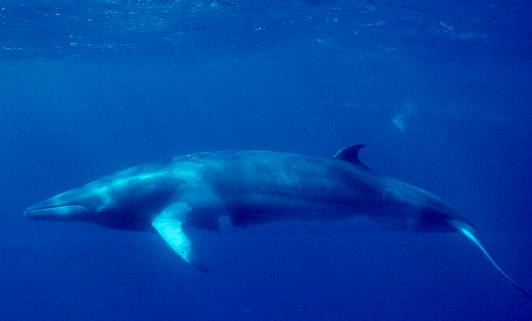


Among the giants of the ocean, there is a whale that stands out for its slender build and quick movements.
That whale is the minke whale. Although it is the smallest member of the baleen whale group, it is highly active and remarkably adaptable, roaming oceans around the world.
🧬 What Is a Minke Whale?
The minke whale is a baleen whale known for its relatively small size and streamlined body, which allows for swift swimming and agile maneuvering compared to larger whales.
- Class / Order / Group: Mammalia / Cetacea / Baleen whales
- Key traits
- Smallest of the baleen whales
- Slim, streamlined body
- Fast swimmer
- Often solitary
👉 It truly fits the description: “small but strong.”
🌍 Distribution & Habitat
Minke whales are found in all of the world’s oceans.
- Range
- Arctic to Antarctic waters
- Pacific Ocean
- Atlantic Ocean
- Indian Ocean
- Habitat pattern
- Use both coastal and offshore waters
- Long-distance seasonal migration
🌊 In summer, they move to high-latitude waters rich in food;
in winter, they migrate to warmer seas.
👀 Appearance & Physical Characteristics
- Body length: About 7–10 m (23–33 ft)
- Weight: About 5–10 tons
- Coloration
- Back: dark gray
- Belly: lighter in color
- Fins
- Narrow and pointed
- Distinctive feature
- Many individuals show a white band on the flippers
✨ Overall, minke whales give a distinctly sleek and athletic impression.
🍽️ Diet & Feeding Method
Minke whales are filter feeders, like all baleen whales.
Main prey
- Krill
- Small fish
- Anchovies and sardines
- Plankton
Feeding style
- Rapidly charge into schools of prey
- Take in water and food together
- Expel water through baleen plates, swallowing only prey
🐟 Their smaller size allows them to feed more nimbly than larger whales.
🧠 Behavior & Temperament
- Generally solitary
- Some individuals are curious and approach boats
- Surface briefly to breathe, then dive again quickly
- Less acrobatic than humpback whales, but easier to spot
👉 They may not breach dramatically, but they are among the most commonly observed whales.
🐣 Reproduction & Growth
- Gestation period: About 10 months
- Birth
- Usually one calf
- Nursing
- High-fat milk supports rapid growth
- Growth rate
- Relatively fast compared to larger whales
🐋 Newborn calves are already close to the size of a small bus.
🌱 Ecological Role
Minke whales are an important part of marine ecosystems.
- Regulate populations of krill and small fish
- Maintain balance within the food web
- Contribute to nutrient cycling in the ocean
🌊 Like other baleen whales, they help sustain overall ocean productivity.
⚠️ Relationship With Humans
Minke whales have been at the center of international debate.
- Historical commercial whaling
- Controversies surrounding scientific whaling
- Bycatch in fishing gear
- Ship strikes
👉 Conservation and utilization remain ongoing global issues.
🧡 Why the Minke Whale Is Special
✔️ The smallest and most agile baleen whale
✔️ Widely distributed across global oceans
✔️ Relatively common and frequently observed
✔️ A key species in whale conservation discussions
The minke whale is:
🐋 A small but swift traveler of the seas,
🐋 A quiet yet energetic baleen whale, and
🐋 One of the whales humans encounter most often.
Rather than dominating the ocean with sheer size,
the minke whale slices through the waves with speed and efficiency—
a reminder of the incredible diversity within the world of whales.
Somewhere in the vast ocean today,
a minke whale is moving silently yet purposefully through the water 🌊🐋
댓글 남기기