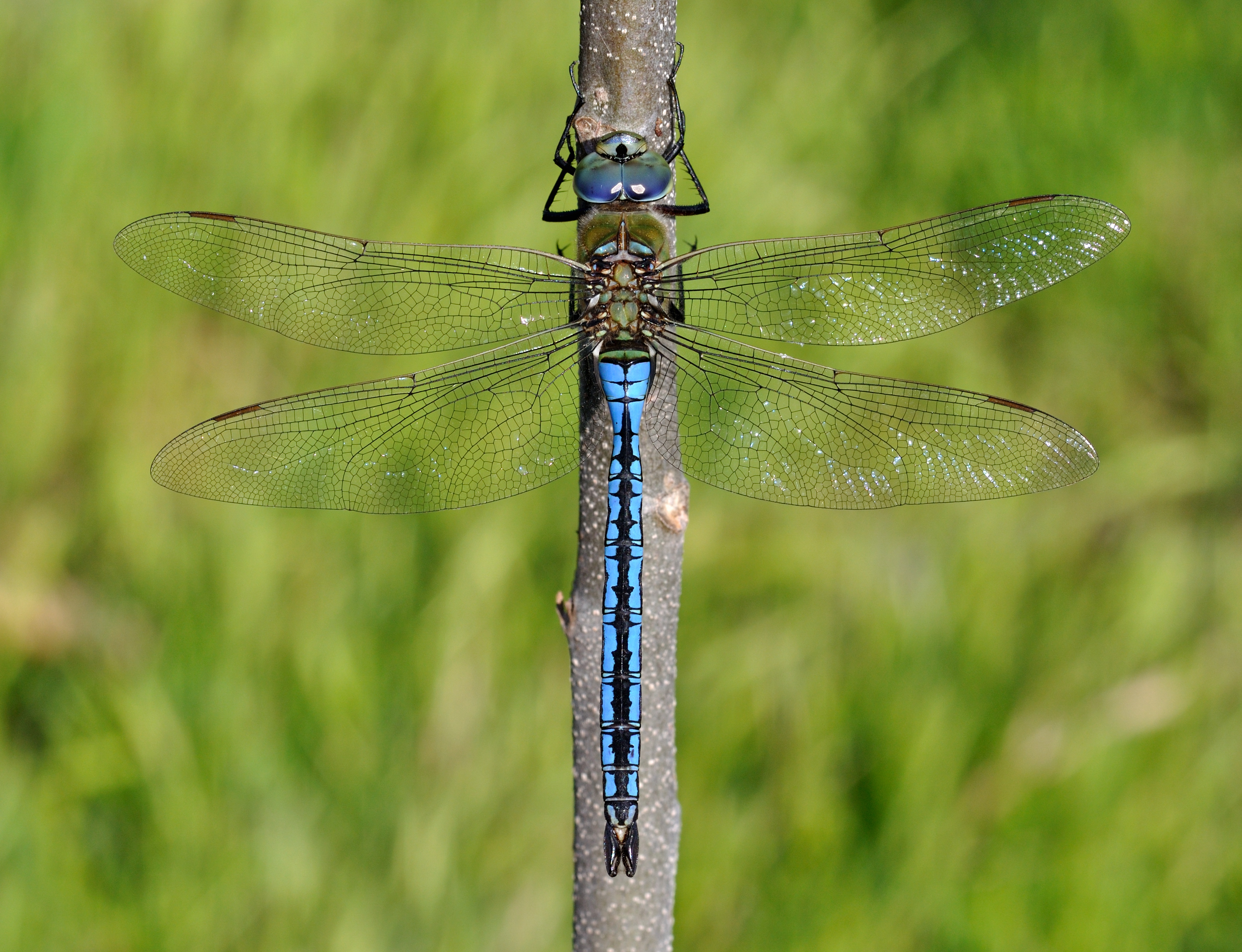


A flash of blue skimming low over ponds and rice fields.
The blue dragonfly is a familiar summer insect, especially known for the male’s vivid blue coloration. Calm in appearance yet incredibly agile in the air, it is a true hunter of the sky.
🧬 What Is the Blue Dragonfly?
The blue dragonfly belongs to the order Odonata and is characterized by the powdery blue coating (pruinosity) that develops on mature males. It is commonly observed in Korea and tends to appear where water quality is reasonably healthy.
- Class / Order / Family: Insecta / Odonata / Libellulidae
- Key traits
- Bright blue body in mature males
- Fast, stable flight
- Strong predatory behavior
👉 Females and immature individuals are brown to yellow-brown, showing clear color changes with age.
🌍 Distribution & Habitat
Blue dragonflies live close to water throughout their lives.
- Distribution
- Across the Korean Peninsula
- Widely in East Asia
- Typical habitats
- Rice paddies and wetlands
- Ponds and reservoirs
- Open areas near streams and rivers
🌿 Where blue dragonflies are present, the aquatic and insect environment is often relatively healthy.
👀 Appearance & Physical Characteristics
- Body length: About 4.5–6 cm (1.8–2.4 in)
- Wings
- Transparent and sturdy
- Body color
- Males: bright blue (after maturity)
- Females & juveniles: brown to yellow-brown
- Eyes
- Large compound eyes providing a wide field of vision
✨ In sunlight, the body shimmers with a soft blue glow.
🍽️ Diet & Hunting Style
Blue dragonflies are carnivorous predators.
Main prey
- Mosquitoes
- Flies
- Small moths
- Various flying insects
Hunting method
- Capturing prey mid-flight
- Scooping insects with their legs and eating them immediately
👉 They are a beneficial insect, helping reduce summer pests.
🐣 Life Cycle (Incomplete Metamorphosis)
Blue dragonflies undergo incomplete metamorphosis.
1️⃣ Egg
2️⃣ Nymph (aquatic stage)
3️⃣ Adult
- Nymph stage
- Lives underwater for several months to over a year
- Preys on small aquatic insects
- Emergence
- Climbs onto plants near the water and transforms into an adult
🦟 Most of their life is actually spent underwater as nymphs.
🧠 Behavior & Habits
- Moderately strong territorial behavior
- Males patrol areas near water
- Often chase away rival dragonflies
⚠️ Completely harmless to humans—dragonflies do not sting or bite.
🌱 Ecological Role
Blue dragonflies play an important role in nature.
- Control mosquito and pest populations
- Link aquatic and terrestrial ecosystems
- Act as indicator species of environmental quality
🦟 Areas with fewer dragonflies often signal declining water quality or ecological health.
🧡 Why the Blue Dragonfly Stands Out
✔️ A signature blue insect of summer
✔️ A sign of clean, healthy water
✔️ Easy and rewarding to observe
✔️ A natural controller of insect pests
The blue dragonfly represents:
🦟 A blue dot in the summer sky,
🦟 A hunter linking water and air, and
🦟 A quiet signal of nature’s well-being.
If you see a blue dragonfly gliding calmly above a pond, it may be a sign that nature is still holding its balance.
Pause for a moment and follow its flight—you’ll find the rhythm of summer written in its wings 🦟💙
답글 남기기