
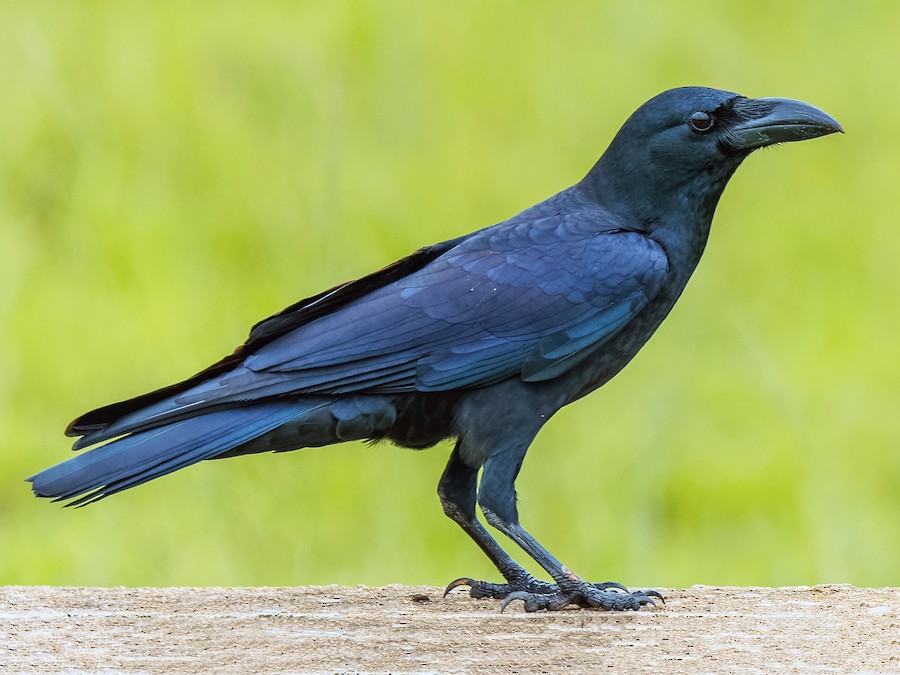
A deep, resonant call echoing from a utility pole,
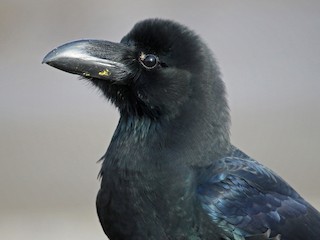
and a massive, unmistakable bill at first glance.
The large-billed crow is one of the most familiar birds around us—and also one of the most intelligent.
🧬 What Is the Large-billed Crow?
The large-billed crow is among the largest members of the crow family, renowned for its exceptional intelligence and adaptability.
- Class / Order / Family: Aves / Passeriformes / Corvidae
- Scientific name: Corvus macrorhynchos
- Key traits
- Thick, strongly curved large bill
- Outstanding learning ability
- Remarkable adaptability to changing environments
👉 When people say “crows are smart,” this species is a prime example.
🌍 Distribution & Habitat
The large-billed crow is widely distributed across Asia and lives very close to human settlements.
- Range
- Throughout the Korean Peninsula
- China, Japan, Southeast Asia
- Northern India
- Habitats
- Cities and residential areas
- Farmlands and rural villages
- Forest edges
- Coasts and mountainous regions
🏙️ Its success in cities has made it a signature urban bird.
👀 Appearance & Physical Characteristics
- Body length: About 50–60 cm (20–24 in)
- Weight: Roughly 700–1,200 g (1.5–2.6 lb)
- Plumage
- Entirely black with a subtle blue sheen in sunlight
- Bill
- Exceptionally large and thick
- Eyes
- Dark, giving an alert and intelligent impression
✨ The bill size and head shape make it relatively easy to distinguish from other crows.
🧠 Remarkable Intelligence & Behavior
Among birds, the large-billed crow ranks at the top in intelligence.
- Capable of using tools
- Remembers human faces
- Learns and shares information about danger
- Strong problem-solving skills
- Communicates knowledge within the group
🧪 Some studies suggest cognitive abilities comparable to young children.
👉 It behaves less like an instinct-driven animal and more like a thinking, decision-making bird.
🍽️ Diet
The large-billed crow is omnivorous with an extremely broad diet.
Common foods
- Grains and seeds
- Insects
- Small animals
- Fruits
- Food waste
- Carrion (acting as a natural cleaner)
🍴 This flexible diet contributes greatly to its survival in diverse environments.
🐣 Breeding & Family Bonds
- Breeding season
- Spring
- Nesting
- Tall trees or high buildings
- Clutch size
- 3–6 eggs
- Parental care
- Both parents raise the chicks
- Family bonds often persist even after fledging
🐦 Crows are known for their strong family relationships.
🧠 Personality & Social Life
- Highly cautious
- Curious and observant
- Cooperative group behavior
- Collective defense when threatened
⚠️ During breeding season, adults may perform warning flights near nests to deter intruders.
🌱 Ecological Role
The large-billed crow plays an important role in ecosystems.
- Removes carcasses, helping keep environments clean
- Helps regulate insect and rodent populations
- Contributes to energy flow within ecosystems
🐦 Despite a negative image, it functions as both a cleaner and regulator in nature.
🧡 Why the Large-billed Crow Is Often Misunderstood
✔️ All-black appearance
✔️ Loud, harsh calls
✔️ Association with urban waste
Yet these traits are simply the results of high intelligence and adaptability—
the species itself is not inherently harmful.
The large-billed crow represents:
🐦 A bird that reads the city,
🐦 A strategist living between humans and nature, and
🐦 A black-feathered survivor guided by intelligence.
Next time you see a crow, try asking yourself:
“What is that bird observing—and what is it learning right now?”
In that moment, the large-billed crow may no longer look like just a black bird,
but rather another intelligent life sharing our space and quietly thinking alongside us 🐦🌿
댓글 남기기