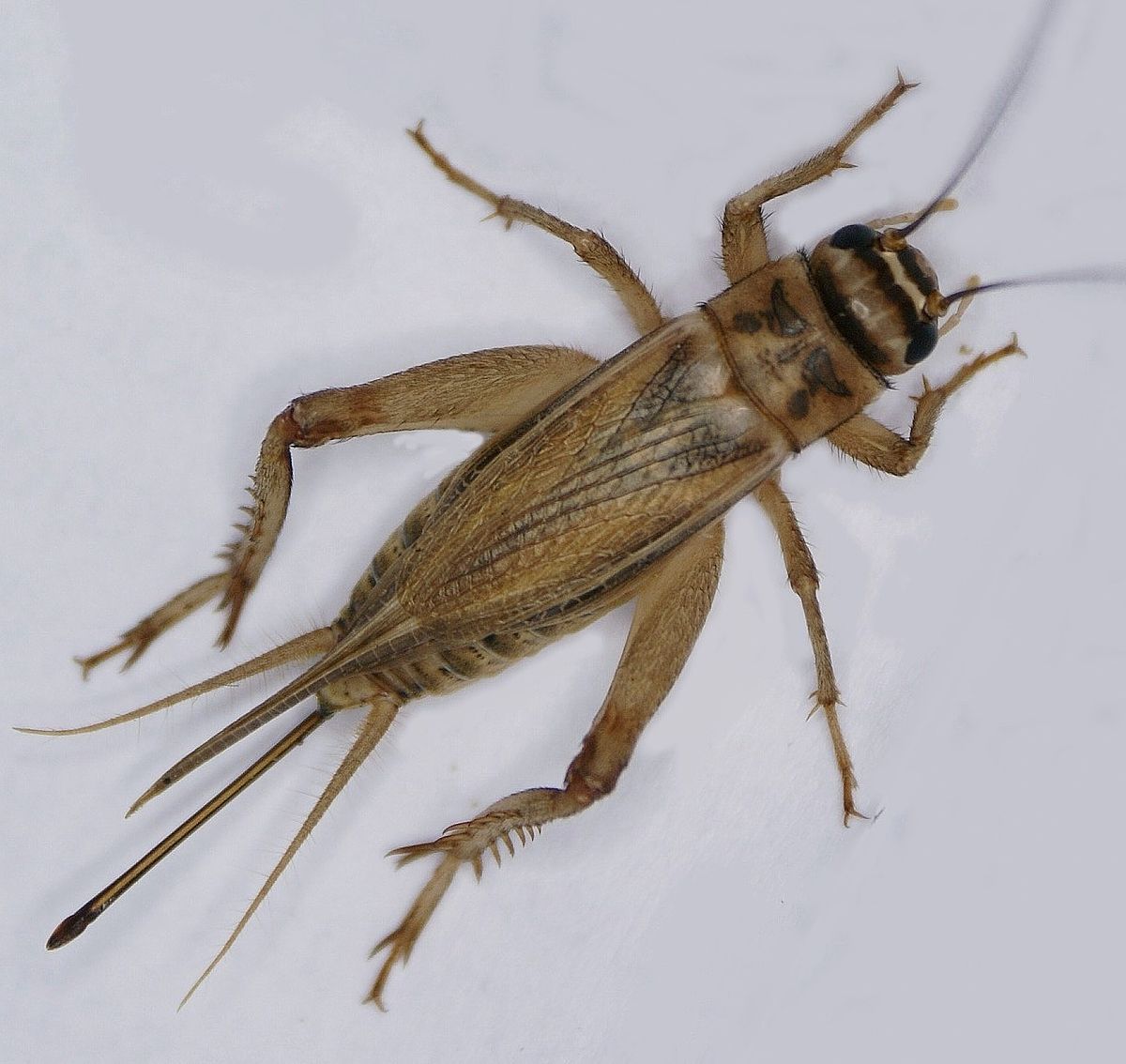


On a quiet night, a clear and rhythmic chirping echoes from somewhere nearby.
The house cricket (Acheta domesticus) is a species that lives in close proximity to human environments. Highly adaptable, it is widely used for breeding, scientific research, and as feeder insects, making it one of the most familiar crickets in the world.
🧬 What Is the House Cricket?
The house cricket is one of the most well-known cricket species globally, recognized for its strong adaptability and ease of care.
- Class / Order / Family: Insecta / Orthoptera / Gryllidae
- Common name: House Cricket
- Scientific name: Acheta domesticus
- Key traits
- Highly adapted to human environments
- Relatively mild temperament
- Easy to breed and manage
👉 As its name suggests, it is often found in and around human dwellings.
🌍 Distribution & Habitat
Originally believed to have originated in Africa and the Middle East, the house cricket is now found worldwide.
- Typical habitats
- Homes, basements, and storage rooms
- Factories and greenhouses
- Warm urban environments
- Preferred conditions
- Warm temperatures (25–30°C / 77–86°F)
- Moderate humidity
- Plenty of hiding places
🏠 During colder seasons, house crickets survive better indoors than outdoors.
👀 Appearance & Physical Characteristics
- Body length: About 1.6–2.2 cm (0.6–0.9 in)
- Coloration
- Light brown to yellowish-brown
- Wings
- Adults possess wings
- Antennae
- Very long and highly sensitive
- Hind legs
- Specialized for jumping
✨ Smaller than giant crickets, but extremely agile.
🎶 Characteristics of the Chirping Sound
The chirping of the house cricket is clear, regular, and rhythmic.
- Who chirps
- Males only
- Purpose
- Attracting females
- Marking territory
- Sound traits
- Repetitive and steady
- Especially noticeable indoors
👉 The higher the temperature, the faster the chirping rate.
🍽️ Diet
House crickets are omnivorous, with a broad diet.
Common foods
- Grains
- Vegetables
- Commercial feeds
- Organic matter
- Small insect remains
👉 This flexible diet makes them exceptionally easy to raise.
🐣 Reproduction & Growth
House crickets are known for their high reproductive capacity.
- Reproduction
- Females lay eggs in soil or moist substrates using an ovipositor
- Development
- Egg → nymph → adult (incomplete metamorphosis)
- Growth rate
- Rapid; adults can emerge within 6–8 weeks under optimal conditions
- Lifespan
- About 2–3 months in captivity
🦗 Fast generation turnover is a major advantage for mass breeding.
🧪 Relationship with Humans
House crickets have multiple roles in human society.
Common uses
- Feeder insects for reptiles and birds
- Insect breeding and ecological education
- Laboratory research organisms
- Edible insects in some cultures
⚠️ However, large indoor infestations may cause noise and hygiene issues.
🌱 Ecological Role
In natural environments, house crickets:
- Assist in organic matter breakdown
- Serve as prey for small predators
- Help maintain energy flow in ecosystems
🦗 Though small, they play a meaningful role in ecological cycles.
🧡 Why the House Cricket Is Noteworthy
✔️ Highly adaptable to human environments
✔️ Easy to breed and manage
✔️ Valuable as feeder insects and educational species
✔️ A classic example of cricket chirping
The house cricket represents:
🦗 The cricket closest to human life,
🦗 A small insect with remarkable usefulness, and
🦗 A living example of everyday ecology.
That steady chirping at night may not be a nuisance—it can be a reminder that natural rhythms still exist alongside us.
Understanding the house cricket offers insight into how insects and hu
답글 남기기