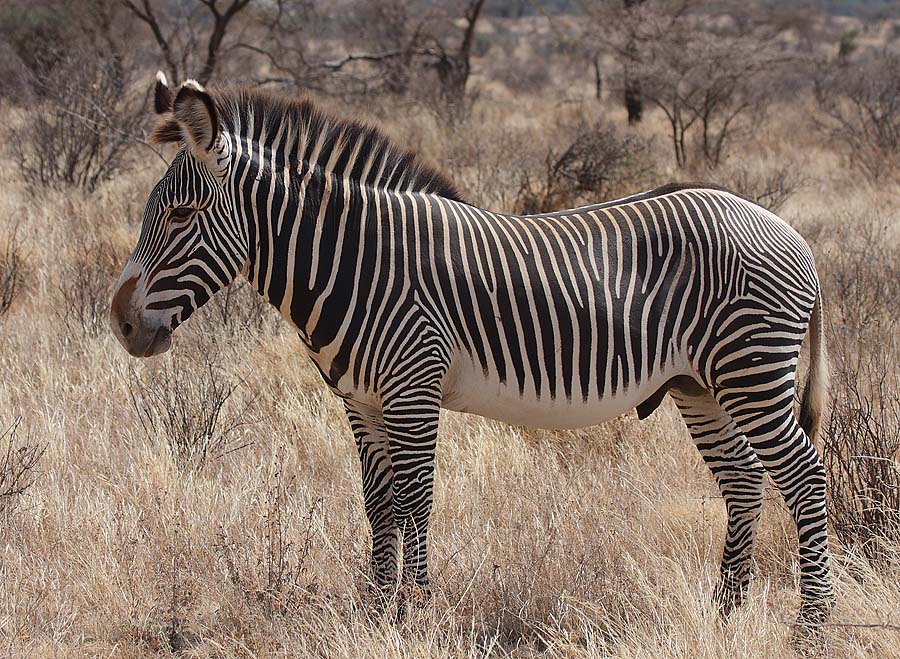


Across the dry savannas of East Africa walks a zebra unlike the others, marked by narrow, finely spaced stripes and a dignified presence.
Grevy’s zebra is the largest and rarest living zebra species, specially adapted to harsh, arid environments.
🧬 What Is Grevy’s Zebra?
Grevy’s zebra differs greatly from the more familiar plains zebra and mountain zebra, showing unique behavior and ecology shaped by scarce resources.
- Order / Family: Perissodactyla / Equidae
- Key traits
- Largest body size among zebras
- Thin, closely spaced stripes
- Exceptional adaptation to dry habitats
👉 The species is named after Jules Grévy, a 19th-century French president.
🌍 Habitat & Distribution
Grevy’s zebras inhabit only limited areas of East Africa.
- Current range
- Northern Kenya
- Parts of Ethiopia
- Preferred habitats
- Semi-deserts
- Dry savannas
- Grasslands with scarce water sources
🌵 They can survive several days without drinking water, a rare ability among equids.
👀 Physical Characteristics
- Shoulder height: ~1.45–1.6 m (4.8–5.2 ft)
- Weight: 350–450 kg (770–990 lb)
- Ears
- Large and rounded
- Stripes
- Narrow and dense
- White belly
- Mane
- Short and upright
✨ The stripe pattern may help with temperature regulation and insect deterrence.
🌿 Diet & Daily Life
- Diet
- Strictly herbivorous
- Main foods
- Coarse grasses
- Shrub leaves
- Activity
- Active both day and night
- Travels long distances in search of food
👉 Grevy’s zebras can digest lower-quality vegetation than other zebras.
🧠 Social Structure & Behavior
Their social system is very different from other zebra species.
- Group structure
- No permanent family herds
- Loose, temporary groupings
- Males
- Defend large territories
- Females
- Move freely between territories
🧠 This flexible structure reflects adaptation to resource-poor environments.
🐣 Reproduction & Growth
- Gestation period: ~13 months
- Births
- One foal at a time
- Foals
- Can walk and run shortly after birth
- Independence
- Around 2–3 years
✨ Foal survival depends heavily on access to water and food.
⚠️ Conservation Status
Grevy’s zebra is classified as Endangered.
Major threats
- Habitat loss
- Competition with livestock
- Drought and climate change
- Illegal hunting
📉 From tens of thousands in the past, the population has declined to roughly 2,000–3,000 individuals today.
🌱 Ecological Role
- Maintains balance among herbivores in dry regions
- Influences vegetation structure
- Provides prey for large predators
👉 Grevy’s zebra acts as an ecological bridge between deserts and savannas.
🧡 Why Grevy’s Zebra Is Special
✔️ The largest and rarest zebra species
✔️ Unique social organization
✔️ A symbol of extreme environmental adaptation
✔️ A key indicator species for conservation success
Grevy’s zebra represents:
🦓 A solitary yet resilient survivor,
🦓 A refined pattern etched onto dry landscapes, and
🦓 A symbol of the fragile balance of African ecosystems.
The fact that these zebras still roam the savanna means that hope for conservation remains.
Protecting Grevy’s zebra is not just about saving one species—it is about securing the future of dry grassland ecosystems 🦓🌍
댓글 남기기