

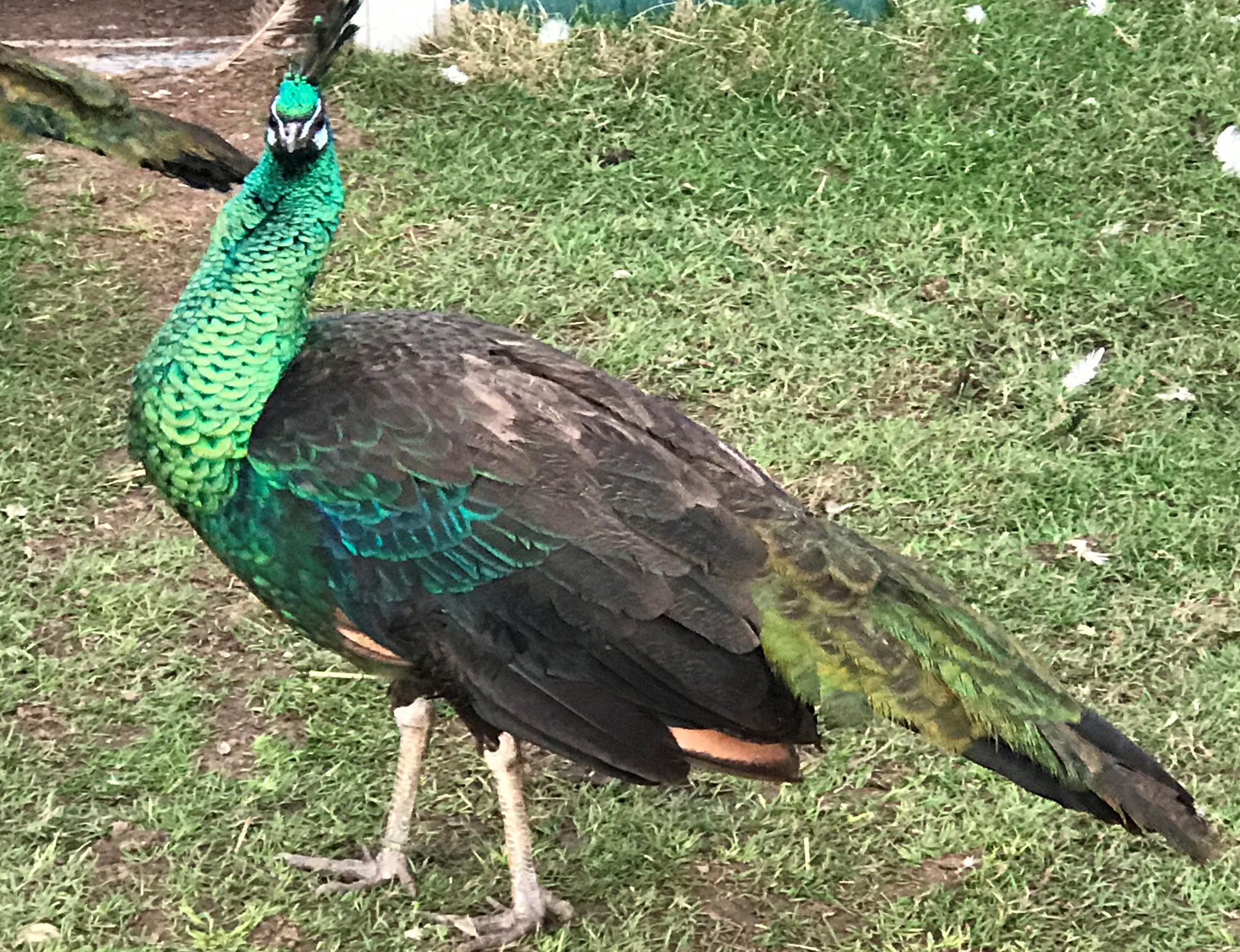
An emerald-green body shimmering with metallic light, long flowing tail feathers, and a piercing call echoing through the forest.
The Javan peacock refers to the Java Island population of the green peafowl, a bird renowned for having even longer and more vivid plumage than the Indian peacock. It stands as a symbol of beauty within Southeast Asia’s tropical ecosystems.
🧬 What Is the Javan Peacock?
The Javan peacock is commonly understood as the green peafowl (Pavo muticus) population native to Java Island, Indonesia.
- Order / Family: Galliformes / Phasianidae
- Key characteristics
- Longer and more ornate tail feathers than the Indian peacock
- Metallic green coloration across most of the body
- Adapted to tropical forests and open grasslands
👉 While once considered a separate species, it is now generally treated as a regional population of the green peafowl.
🌍 Habitat & Distribution
Javan peacocks have a highly restricted range, centered on Java Island.
- Typical habitats
- Lowland tropical forests
- Forest edges
- Grasslands near farmland
- Environmental preferences
- Areas close to water
- Landscapes combining cover and open ground
🌴 Because their habitat often overlaps with human activity, they face constant environmental pressure.
👀 Physical Characteristics
- Total length (males): Up to 3 m (10 ft), including tail
- Weight: ~3.5–6 kg (7.7–13.2 lb)
- Plumage
- Head, neck, and chest: metallic green
- Tail: long feathers with dense eye-like patterns
- Crest
- Sharp, upright crest (unlike the fan-shaped crest of the Indian peacock)
- Females
- Smaller body size
- Shorter, less ornate feathers
✨ In sunlight, the feathers appear to shift between green, turquoise, and gold hues.
🎭 Behavior & Temperament
- Activity pattern
- Active during the day
- Roosts in trees at night
- Temperament
- Highly alert and wary
- May form loose groups, though males dominate during breeding season
- Vocalization
- Loud, sharp calls
- Used for communication and territorial signaling
👉 In dense forests, the Javan peacock is often heard before it is seen.
🍃 Diet
Javan peacocks are omnivorous.
- Common foods
- Seeds
- Fruits
- Insects
- Small reptiles
- Foraging style
- Walks along the ground searching for food
- Sometimes feeds near agricultural fields
🌱 A broad diet allows moderate flexibility in changing environments.
🐣 Reproduction & Growth
- Breeding season
- Usually during the dry season
- Courtship
- Males display fully spread tail feathers
- Combine posture, calls, and plumage to attract females
- Clutch size
- 3–6 eggs
- Parental care
- Females raise chicks alone
✨ The dramatic tail display reflects evolution prioritizing reproductive success over survival efficiency.
⚠️ Threats & Conservation Status
The Javan peacock is considered Critically Endangered in the wild.
Major threats
- Habitat destruction
- Illegal hunting and capture
- Poaching for decorative feathers
- Agricultural expansion
📉 In some areas, wild populations have declined to extremely low numbers.
🌱 Ecological Role
- Disperses seeds
- Helps control insect populations
- Links forest and grassland ecosystems
👉 The Javan peacock is both an ecological and aesthetic emblem of tropical forests.
🧡 Why the Javan Peacock Is Special
✔️ One of the most beautiful peafowl in the world
✔️ Longer and more elegant plumage than the Indian peacock
✔️ A symbolic species of Java’s natural heritage
✔️ At serious risk of extinction without protection
The Javan peacock represents:
🦚 A forest adorned by nature itself,
🦚 The most vivid colors evolution can offer, and
🦚 A beauty that may vanish if not protected today.
Its presence signals that a forest is still alive.
Protecting the Javan peacock means safeguarding not just a single species,
but the diversity, elegance, and living artistry of tropical ecosystems 🌿🦚
댓글 남기기