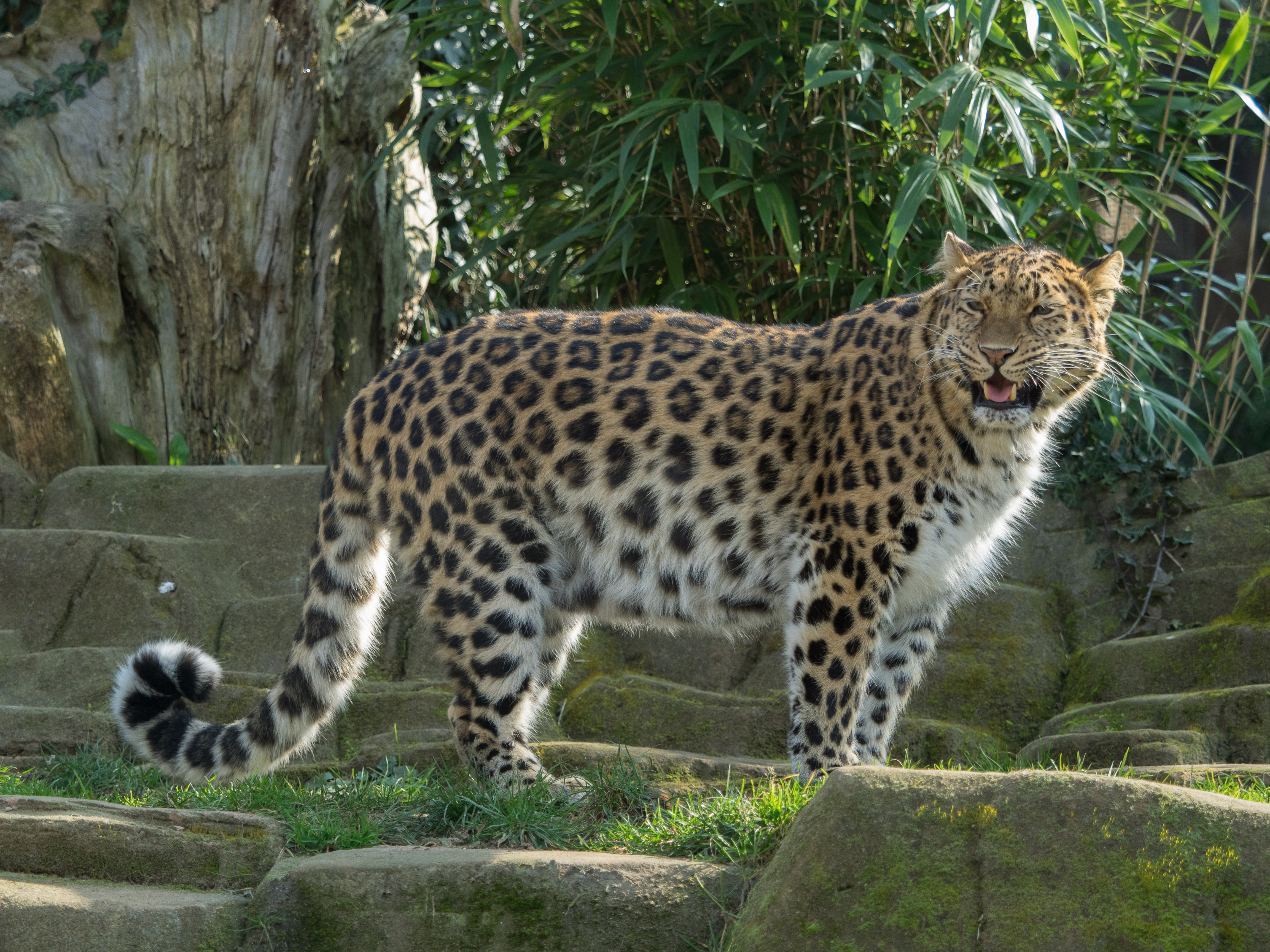


Rosette patterns standing out sharply against white snow, a silent and fluid movement through frozen forests.
The Amur leopard is one of the rarest big cats on Earth, a powerful symbol of survival and adaptation in extreme cold.
🧬 What Is the Amur Leopard?
- Scientific name: Panthera pardus orientalis
- Classification: Subspecies of leopard
- Also known as: Far Eastern leopard
- Conservation status: Critically Endangered
👉 With an extremely small population in the wild, the Amur leopard cannot survive without continued protection.
🌍 Habitat & Distribution
Amur leopards inhabit the Russian Far East and parts of northeastern China.
- Typical environments
- Mixed coniferous and deciduous forests
- Mountainous terrain
- Regions with heavy snowfall and long winters
❄️ They are the only leopard subspecies adapted to temperatures as low as –30°C (–22°F).
👀 Physical Characteristics
- Weight
- Males: ~32–48 kg (70–106 lb)
- Females: ~25–43 kg (55–95 lb)
- Fur
- Winter: Long, thick, pale-colored coat
- Summer: Shorter, golden coat
- Pattern: Large, widely spaced rosettes
- Tail: Long, aiding balance and movement
✨ Their coloring and patterns provide excellent camouflage in snowy forests.
🐾 Lifestyle & Hunting
Amur leopards are solitary and primarily nocturnal.
- Main prey
- Roe deer
- Sika deer
- Wild boar piglets
- Hares and small mammals
- Hunting style
- Silent stalking
- A single powerful leap to capture prey
- Often drags prey into trees to store it
👉 They maintain large territories and show strong territorial behavior.
🧠 Intelligence & Behavior
- Exceptional stealth and camouflage skills
- Strategic movement using terrain
- Strong memory and learning ability
- Extremely efficient energy use in harsh climates
🐆 In extreme cold, silence and efficiency are key survival strategies.
🐣 Reproduction & Growth
- Breeding season: Winter to early spring
- Gestation period: ~90–105 days
- Litter size: 1–3 cubs
- Independence: Around 1.5–2 years of age
👉 Cub survival depends heavily on prey availability and environmental conditions.
⚠️ Why the Amur Leopard Is Endangered
The species was once pushed to the brink of extinction.
Major threats
- Poaching for its beautiful fur
- Habitat loss and fragmentation
- Decline in prey populations
- Extremely low genetic diversity
📉 In the late 20th century, the wild population dropped to fewer than 30 individuals.
🌱 Conservation Efforts & Hope
Thanks to international conservation efforts, the Amur leopard is showing slow but hopeful signs of recovery.
- Expansion of protected areas
- Strong anti-poaching enforcement
- Russia–China cooperation programs
- Captive breeding and genetic management
🌍 The situation remains fragile, but recovery is possible.
🧡 Why the Amur Leopard Matters
✔️ The only leopard adapted to extreme cold
✔️ One of the rarest apex predators on Earth
✔️ A key indicator of forest ecosystem health
✔️ A species whose survival depends on human responsibility
The Amur leopard represents:
🐾 The last wild presence in the snow,
🐾 The limits of biological adaptation, and
🐾 A promise humanity must keep with nature.
Protecting this leopard means more than saving a single species—it is about honoring our responsibility to the natural world.
Somewhere in a frozen forest today,
the Amur leopard continues to walk quietly, surviving against all odds ❄️🐆
댓글 남기기