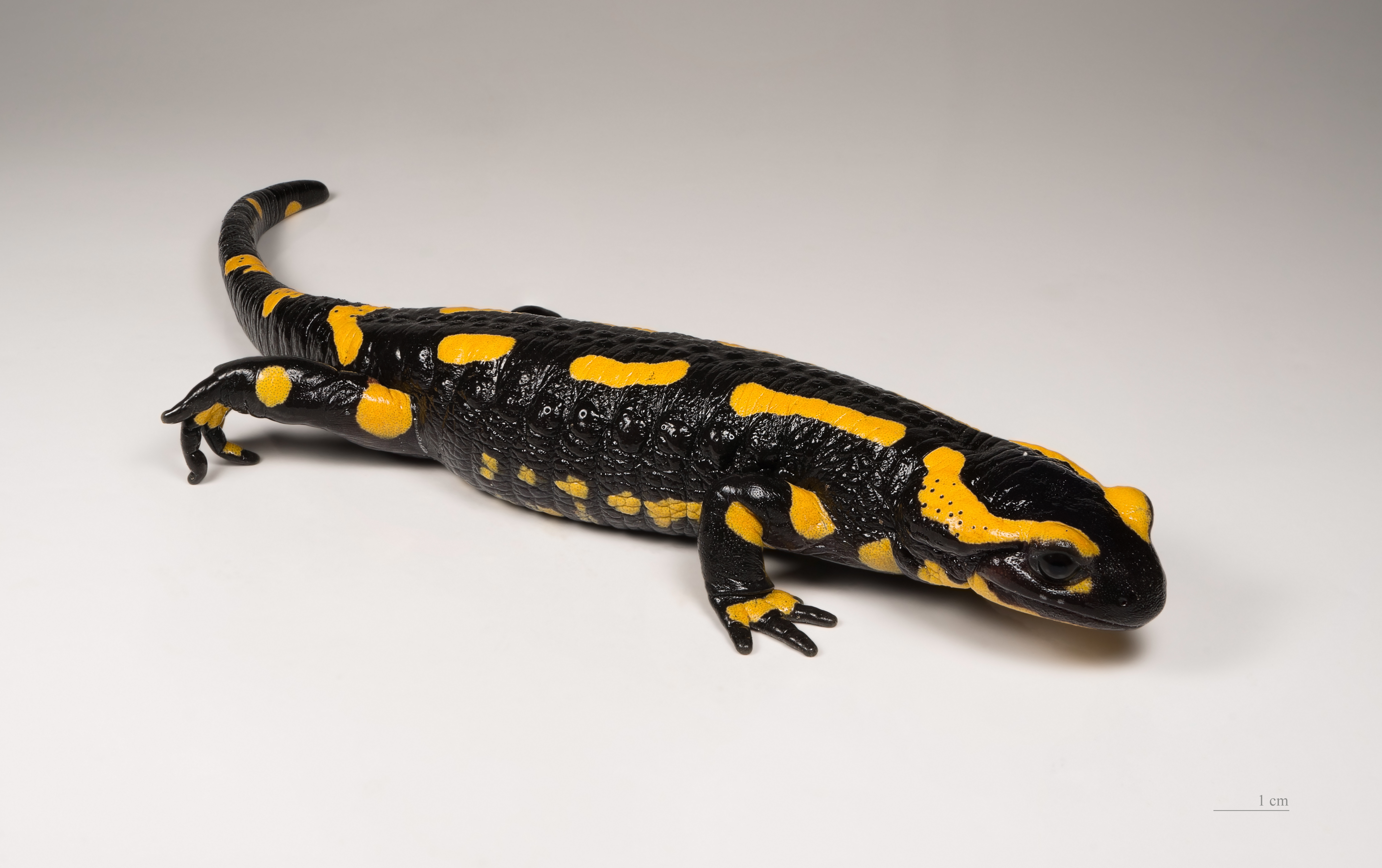
A glossy black body marked with vivid yellow patterns,
quietly moving across the damp forest floor—
the fire salamander (Salamandra salamandra) is one of Europe’s most iconic amphibians.
Its striking colors and unusual ecology have fascinated people for centuries.
🧬 What Is the Fire Salamander?
The fire salamander is a largely terrestrial amphibian in the salamander family.
The name “fire” is said to come from old beliefs that the animal emerged from burning logs placed on fires.
- Class / Order / Family: Amphibia / Urodela / Salamandridae
- Native range: Europe
- Key traits
- Bold black-and-yellow warning coloration
- Toxic skin secretions
- Preference for moist forest habitats
- Nocturnal lifestyle
👉 Its colors clearly signal: “Do not eat.”
🌍 Distribution & Habitat
Fire salamanders are widely distributed across Europe.
- Main regions
- Germany
- France
- Spain
- Italy
- The Balkans
- Habitats
- Moist deciduous forests
- Forest streams and springs
- Areas under rocks, logs, and leaf litter
🌧️ They are highly sensitive to dryness and depend on humid environments.
👀 Appearance & Physical Characteristics
- Body length: About 15–25 cm (6–10 in)
- Build: Short and robust
- Distinctive features
- Black base color with yellow spots or stripes
- Unique patterning on each individual
- Smooth, shiny skin
- Skin secretions
- Contain toxins
- Used for defense against predators
✨ The bright coloration functions as classic aposematic (warning) coloration.
🧠 Behavior & Activity
- Primarily nocturnal
- Hide under logs or stones during the day
- Slow-moving and deliberate
- Weak territorial behavior
🦎 When threatened, they exude toxic substances to deter predators.
🍽️ Diet & Feeding Habits
Fire salamanders are carnivorous.
Main foods
- Insects
- Earthworms
- Snails
- Spiders
- Other small invertebrates
👉 They help reduce forest-floor pest populations.
🐣 Reproduction & Life Cycle
Fire salamanders have an unusual reproductive strategy.
- Reproduction
- Females give birth to aquatic larvae, not eggs
- Birthing sites
- Clean streams or springs
- Larval stage
- Develop in water before moving onto land
- Lifespan
- About 15–20 years in the wild
- Often longer in captivity
🕊️ They are among the longer-lived amphibians.
🌱 Ecological Role
- Control populations of invertebrates
- Serve as indicators of forest health
- Act as mid-level predators in forest food webs
🌍 The fire salamander is a biological indicator of healthy woodland ecosystems.
⚠️ Threats & Conservation
Fire salamanders face increasing threats.
Major risks
- Habitat destruction
- Water pollution
- Fungal diseases affecting amphibians
- Climate change
👉 In several regions, they are legally protected.
🧡 Why the Fire Salamander Is Special
✔️ Striking, flame-like appearance
✔️ Unique chemical defense system
✔️ Indicator of healthy forest ecosystems
✔️ A long-standing figure in myths and folklore
The fire salamander is:
🔥 A small warning light on the forest floor,
🔥 Nature’s language written in color,
🔥 A symbol of fragile forest life that must be protected.
On a rainy night, encountering a black-and-yellow salamander on a forest path may be a quiet yet vivid reminder that the natural world is still alive and speaking to us.
댓글 남기기